
Suez Shows Signs of Life as Major Ocean Carriers Cautiously Return After Two-Year Red Sea Exodus
Jan 13, 2026
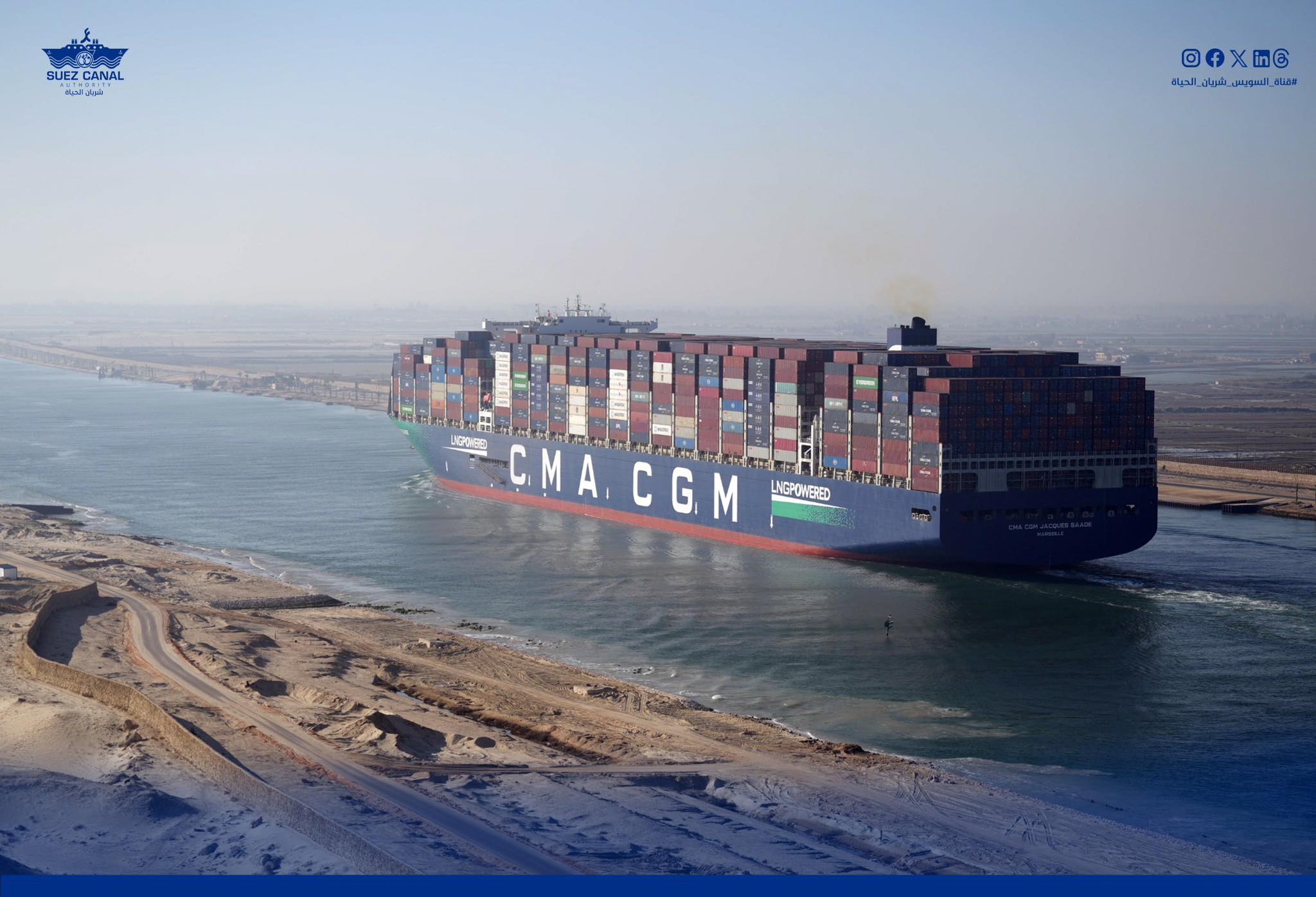
Containership traffic through the Suez Canal is finally inching higher.
In the week ending January 11, 26 containerships transited the canal, the highest weekly total in more than a month, according to Drewry’s newly launched Red Sea Diversion Tracker. It is a small number by historical standards — but a meaningful one for a trade route that has been largely deserted since late 2023.
The rebound comes after just 10 transits the previous week, when post-Christmas slowdowns kept volumes depressed. But this latest uptick looks different.
According to Drewry, CMA CGM, APL and MSC pushed five ships larger than 8,000 TEU through Suez, up from only two the week before. Smaller regional operators never fully abandoned the route, but this marks the clearest sign yet that global carriers are beginning to test whether the Red Sea is finally navigable again.
Before the crisis, Suez routinely handled around 80 containerships a week, carrying roughly 12 percent of global seaborne trade between Asia and Europe. That traffic collapsed after Yemen’s Houthi rebels began attacking commercial shipping in October 2023, forcing carriers to divert thousands of miles around the Cape of Good Hope.
Since then, more than 100 merchant ships have been targeted, four have been sunk, one seized, and at least eight seafarers killed.
Now, for the first time in nearly two years, some of the world’s largest operators are inching back.
Maersk completed its second Red Sea transit on January 11–12 when the U.S.-flagged Maersk Denver passed safely through the strait on its Middle East–U.S. East Coast MECL service. It followed the December return of the Maersk Sebarok, the company’s first Suez passage since the attacks began.
“The safety of our crew, vessels and cargo remains of utmost importance,” Maersk said, stressing that any return will be gradual and conditional.
CMA CGM is moving faster. The French carrier had plans to resume Suez transits this month on its INDAMEX India–U.S. service, and in late December sent the 23,000-TEU CMA CGM Jacques Saade — the largest ship to use the canal in two years — through the route.
Still, the industry is hedging its bets.
According to Drewry, traffic around the Cape of Good Hope surged to 203 voyages in the same week, more than double the previous week’s total. The message is clear: most carriers remain unconvinced that the danger has truly passed.
“The return to the Suez Canal is one of this year’s key swing factors for capacity, freight rates and transit times,” said Drewry’s Philip Damas, who expects carriers to proceed cautiously, watching insurance costs, competitor behavior, and the risk of port congestion in Europe.
Egypt, meanwhile, is desperate for a full recovery. Canal tolls are a vital source of foreign currency, and Suez Canal Authority chairman Adm. Ossama Rabiee has said he hopes traffic will normalize by the second half of 2026.
For now, every transit is a live-fire test.
Whether the Red Sea is finally reopening — or simply offering a brief lull — is a question the world’s biggest carriers are still answering one ship at a time.