
How a Quiet Regulatory Power Shift Could Supercharge U.S. Energy Exports
Jan 9, 2026
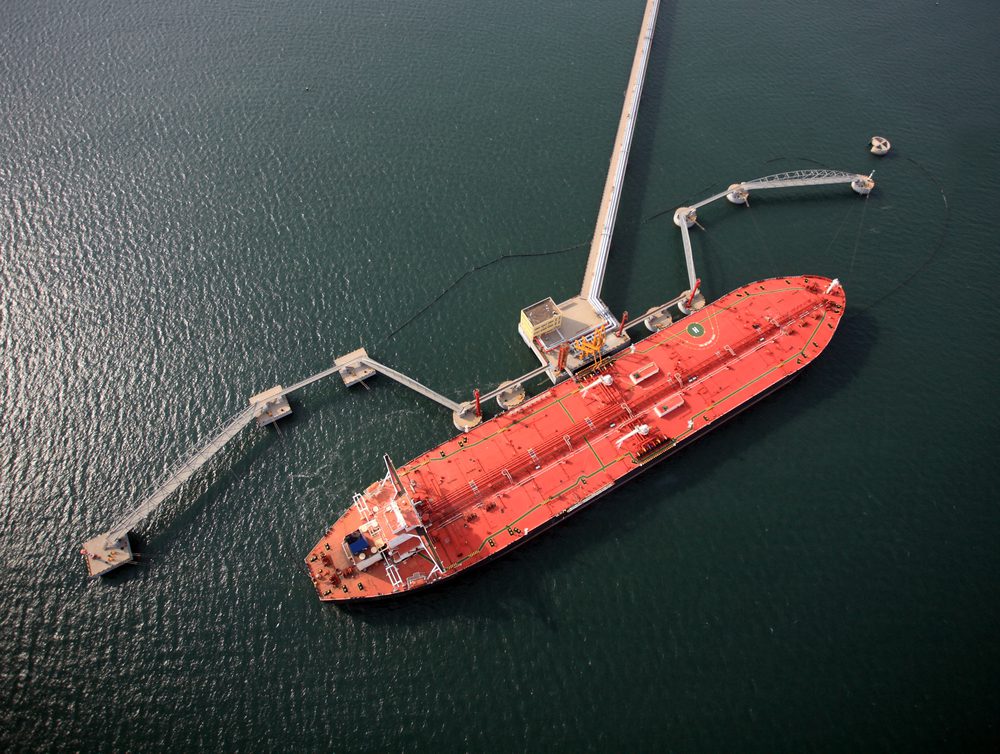
A new policy hands MARAD the lead role in approving offshore ports, a move officials say will streamline environmental reviews and unlock billions in stalled energy export projects.
Paul Morgan (gCaptain) – In a move that could reshape how the United States approves some of its most strategically important maritime infrastructure, the Trump administration has transferred responsibility for deepwater port licensing from the U.S. Coast Guard to the U.S. Maritime Administration (MARAD).
The policy, announced on January 5 by Transportation Secretary Sean Duffy, marks the most significant change to offshore terminal permitting since the Deepwater Port Act was passed more than fifty years ago. Officials say the shift will streamline environmental reviews, reduce multiyear delays and accelerate development of major offshore facilities, including LNG export terminals, crude-oil loading platforms, and the ports required to support the next generation of offshore wind and alternative-fuel industries.
At the center of the shift is a consequential administrative reordering. MARAD will now serve as the lead federal agency for environmental analysis under the National Environmental Policy Act, taking over from the Coast Guard, which has led these reviews since the 1970s. The Coast Guard retains its central role in safety oversight, structural and operational regulation, security standards and inspection of deepwater port facilities, but it no longer directs the licensing process itself. The change was authorized by language in the Coast Guard Authorization Act of 2025, which formally reassigns NEPA duties and licensing leadership to MARAD.
The rationale behind the change is rooted in long-standing frustration with the pace of offshore terminal approvals. Under the Deepwater Port Act, developers must satisfy extensive environmental, maritime-safety and financial criteria before a license can be granted. The statistics reveal a regulatory bottleneck that has frustrated industry for decades. Since the licensing system was created in 1975, only 31 applications have been filed and a mere eight licenses ever issued. Several flagship projects illustrate the problem.
According to MARAD’s website, more than 3.8 million barrels per day of new offshore crude export capacity and roughly 10.6 million tonnes per year of LNG capacity are currently stalled in the Maritime Administration’s deepwater port licensing pipeline, with at least four major oil and gas terminals trapped under so-called “stop-clock” suspensions. The delayed projects — Blue Marlin, Bluewater Texas, New Fortress Energy’s Louisiana FLNG, and West Delta LNG — represent enough capacity to materially reshape U.S. energy exports, tanker demand, and global supply balances, yet most have been effectively frozen since 2019–2022 as regulators await additional environmental and technical information.
Phillips 66’s Bluewater Terminal, filed in May 2019, suffered a devastating setback in 2022 when the EPA forced the company to withdraw and refile permits due to emissions compliance issues. After six years, the project remains suspended and in regulatory limbo. Energy Transfer’s Blue Marlin Offshore Port, filed in October 2020, has been positioned as the only brownfield project that could leverage existing infrastructure to speed construction, yet still awaits federal approval despite completing internal engineering studies and securing a heads of agreement with TotalEnergies.
MARAD and senior DOT officials argue that giving a single agency clear responsibility for coordinating environmental reviews will eliminate duplication, reduce bottlenecks and allow the United States to approve strategically important maritime infrastructure at a pace that matches market demand. Duffy framed the change as central to President Trump’s energy dominance strategy, arguing it will help America use more of its natural resources, create good-paying jobs, and lower energy costs for families.
MARAD Administrator Steve Carmel, who was only recently confirmed in December, said the agency is ready to take the helm. “We’re excited to lead the Deepwater Port Program and continue working closely with the Coast Guard to make the process more efficient and fuel our energy economy for years to come.”
Just before the policy shift took effect, Sentinel Midstream’s Texas GulfLink deepwater crude oil export terminal received its Record of Decision from MARAD on February 14, 2025, concluding a multi-year environmental and technical review. Located approximately 30 miles off Brazoria County, Texas, the facility represents the kind of project the administration hopes to expedite.
For the U.S. energy sector, the implications are immediate. Offshore LNG export terminals, often built in deepwater locations because their carriers require depths that many onshore ports cannot provide, have become vital to America’s role as one of the world’s largest LNG suppliers.
Preliminary data shows the United States became the world’s first country to export more than 100 million tonnes of LNG in a single year in 2025, while crude oil exports topped 4.1 million barrels per day in 2024. Companies behind several proposed Gulf-based projects, including floating liquefaction schemes and fixed-platform gas export terminals, have privately expressed confidence that MARAD’s more centralized coordination will reduce waiting times and increase investor certainty. A more predictable approval pathway could unlock billions of dollars in spending over the next decade.
Ports, dredging firms, offshore engineering specialists and vessel operators have welcomed the change. The American Association of Port Authorities praised the decision as common-sense reform, arguing that it aligns environmental oversight with MARAD’s broader mission to strengthen U.S. maritime infrastructure. Supporters argue that MARAD, as part of the Department of Transportation, is better suited than the Coast Guard to coordinate NEPA consultations with other federal agencies such as NOAA, EPA and the Army Corps of Engineers, all of which play central roles in environmental and navigational reviews.
But not everyone is convinced. Critics, including former MARAD officials and environmental-law specialists, warn that the transition risks overwhelming an agency that has historically played a smaller role in NEPA litigation and environmental analysis than the Coast Guard. Jeff Lewis, former MARAD chief counsel now with Cozen O’Connor, warned last year that the Coast Guard standards and law divisions already have the breadth and depth of experience from 50 years of deepwater port work, while MARAD does not possess these competencies at all.
Some worry that the change could weaken environmental scrutiny or create fresh administrative confusion if MARAD lacks sufficient personnel and technical expertise. A 2025 legal commentary by Cozen O’Connor warned that the shift could undermine the robustness of environmental assessments and complicate the interface between environmental analysis and maritime safety obligations.
Environmental groups remain cautious. Although the administrative reorganization does not reduce the legal obligations under NEPA or the Deepwater Port Act, requirements for impact assessments, endangered-species consultations, air-quality modelling and spill-risk mitigation remain unchanged. They fear that political pressure to accelerate fossil-fuel export capacity could influence how aggressively MARAD evaluates cumulative impacts. Texas Gulf Link, which received its Record of Decision just weeks ago, is projected to emit over 100 million tons of greenhouse gases annually. Residents along the Texas Gulf Coast have raised concerns about air quality impacts on already overburdened communities, reflecting broader tensions between the administration’s energy dominance agenda and environmental justice advocates who argue these facilities lock in decades of fossil fuel dependence and pollution. The Department of Transportation insists that every statutory safeguard remains intact, and that NEPA timelines will be improved through better coordination rather than reduced scrutiny.
Beyond energy exports, the policy has wider resonance for the U.S. maritime sector. Deepwater port licenses are expected to underpin future offshore infrastructure, including ammonia and hydrogen export hubs, large-scale carbon-capture and sequestration terminals, and the supply bases needed to support expanded offshore wind deployment. The Deepwater Port Act was originally designed for oil imports but has evolved significantly over five decades. Congress expanded the law in 2002 to include natural gas facilities and again in 2012 to address LNG exports specifically. As these industries grow, MARAD’s leadership role could make it one of the most influential agencies shaping the next generation of American maritime commerce.
The shift also reflects a broader repositioning of maritime priorities in Washington. Amid geopolitical competition over energy security, supply-chain resilience and emerging maritime technologies, the U.S. is moving toward a more coordinated federal maritime strategy. Streamlining deepwater port approval is one element of a wider effort to expand offshore industrial capacity and solidify U.S. influence in global energy markets. With global energy demand in flux, shipping markets tightening and geopolitical tensions reshaping trade routes, the ability of the United States to approve and build modern deepwater ports will help determine the country’s competitiveness in a world where maritime infrastructure is once again a strategic asset.
For now, the transition from the Coast Guard to MARAD is complete. The test will come in the months ahead, as MARAD begins issuing draft and final environmental impact statements for pending deepwater port proposals. If timelines improve without compromising safety or environmental integrity, the change may be hailed as the most significant modernization of U.S. offshore-infrastructure policy in decades. If not, critics will claim that Washington has traded expertise for expediency. What is certain is that the stakes are high, both for the projects worth billions of dollars currently languishing in the regulatory pipeline and for America’s broader ambitions to dominate global energy markets through expanded maritime infrastructure.